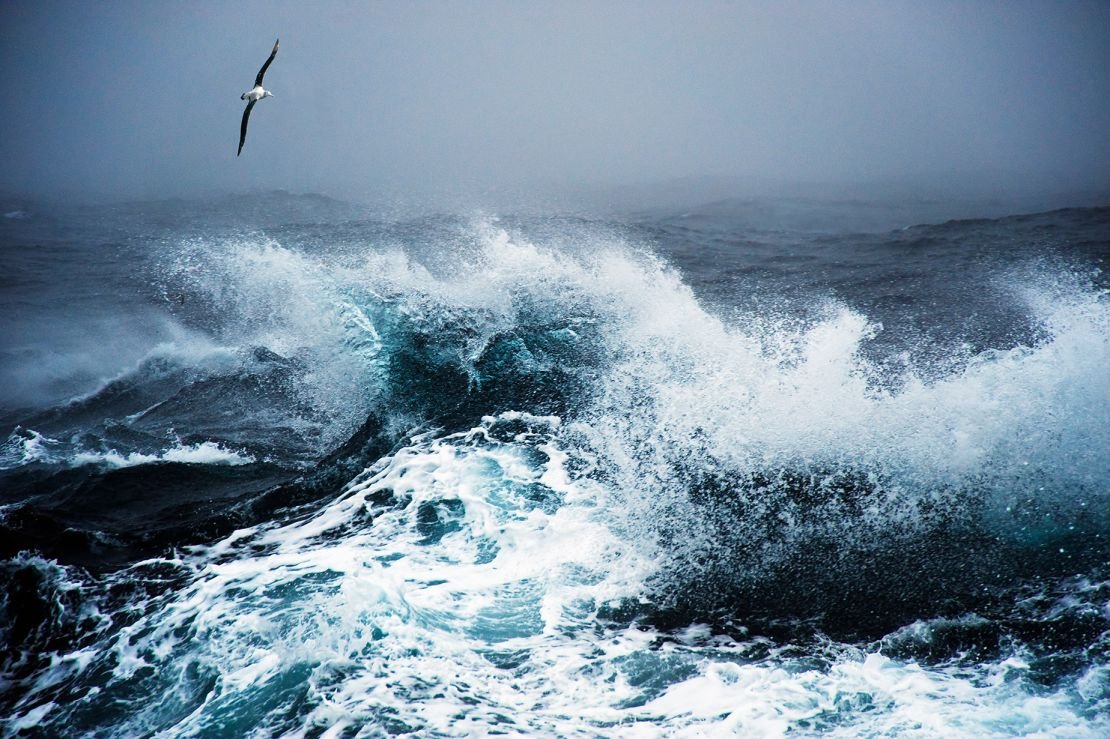
The Drake Passage, a 600-mile stretch of open sea connecting the southern tip of South America with the northernmost point of the Antarctic Peninsula, is known for its formidable reputation among sailors and explorers. It presents a challenging journey to Antarctica, with rough conditions and the possibility of encountering waves nearly 50 feet high. For those undertaking this passage, surviving the “Drake shake” has become a badge of honor, adding to the allure of reaching the “white continent.”
The Drake Passage’s unique characteristics make it one of the most treacherous waterways on the planet. It is a narrow passage squeezed between the Antarctic Peninsula and the southern tip of South America, creating a natural funnel for winds to circulate without hindrance from landmasses. The region is notorious for strong winds, often referred to as the “roaring forties,” “furious fifties,” and “screaming sixties,” corresponding to latitudes 40 to 60 degrees.
The absence of significant landmasses along the passage allows winds to build up momentum, leading to powerful storms and waves. The winds, blowing from west to east, cover vast distances over the Southern Ocean before hitting the passage, resulting in waves that can reach up to 15 meters (49 feet). The Drake Passage is also part of the most voluminous ocean current globally, with a substantial flow of up to 5,300 million cubic feet per second.
Underneath the surface, the passage is home to underwater mountains that contribute to the turbulence. The narrowness of the passage intensifies storms, creating a funneling effect. The sheer volume of water flowing through the Drake Passage, combined with the absence of landmasses to slow down the winds, makes it a challenging and turbulent environment.
Oceanographers find the Drake Passage fascinating due to the underwater dynamics that contribute to the region’s unique characteristics. The passage’s turbulent waters generate internal waves, causing vortices that bring colder water from the ocean depths to the surface. This process has implications for the planet’s climate.
Despite its challenges, the Drake Passage remains a critical route for ships traveling between South America and Antarctica. Historically, ships had to navigate this passage before the opening of the Panama Canal in 1914, contributing to its fearsome reputation. Today, crossing the Drake Passage is a complex task that demands careful planning, constant monitoring of weather conditions, and a healthy respect for the unpredictable nature of the journey.
Captains navigating the passage emphasize the need for a “healthy fear” and maintain a safety margin to ensure both the ship and passengers’ well-being. The planning process starts well in advance, with frequent weather checks and adjustments to the route based on the forecast. Modern cruise ships are equipped with advanced technology and stabilizers to mitigate the impact of rough seas.
Passengers embarking on Antarctic cruises are advised to prepare for the possibility of rough conditions. Seasickness remedies, including ginger candies, acupressure “seeds,” and medication, are recommended. Captains advise passengers to focus on the horizon, hold onto handrails, and avoid sudden movements.
While the Drake Passage remains a challenging and potentially uncomfortable journey, advancements in technology, improved weather forecasting, and safety measures implemented by cruise operators have made the crossing more manageable. For those seeking the thrill of exploring Antarctica, enduring the Drake Passage is a testament to the adventurous spirit and determination to reach one of the world’s most remote and pristine destinations.
Paris sightseeing
Book Paris activities
Louvre museum paris
Paris limousine rental
Rolls Royce Paris
Eiffel Tower Paris
Airport Transfer Paris
Book Paris Taxi
Seine River Cruise
Wine Tasting Paris
Paris luxury hotels
Switzerland luxury hotels
Europe Car rental
Europe coach rental
Paris Limousine
Dior Paris
Beauvais Airport transfer